Can Tessolve become India's Infosys of semiconductors?
Why a company that began by testing chips belongs in India's semiconductor story.
Listen to this story
Download audio · 4 min 15 sec
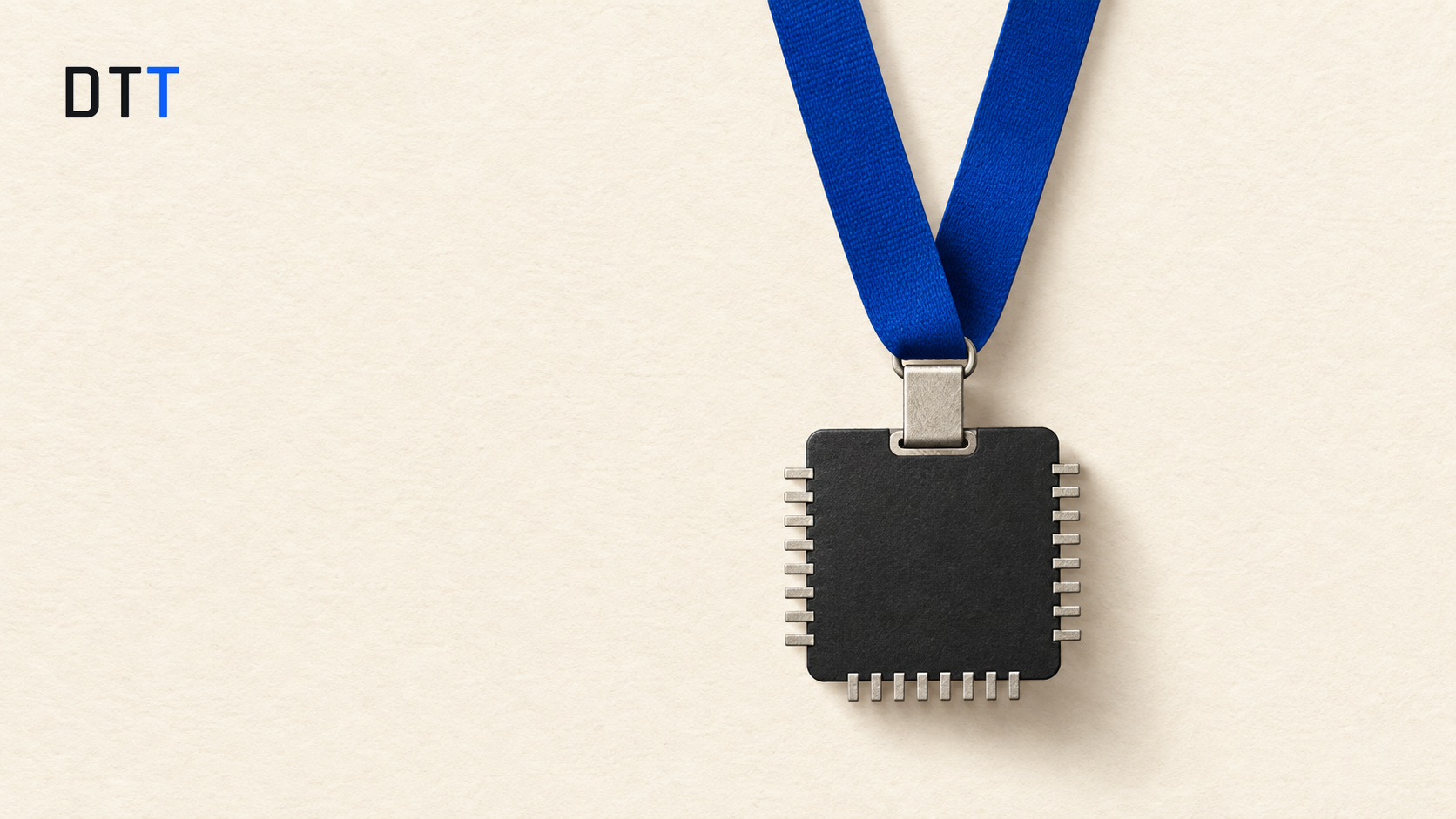
A chip leaves the factory. Surely, the hard part is over?
Someone has spent years designing it. A fabulously expensive factory has put the circuits onto silicon. We should be able to plug it into a computer and get on with our lives.
Except we can't.
The tiny piece of silicon still needs connections to the outside world. It needs protection. Heat needs a way out. And someone has to find out whether the thing actually works.
Preferably before it ends up inside your car.
That unfinished journey is a useful place to meet Tessolve, the Bengaluru semiconductor engineering company. In October, it announced a $75 million investment from Vector Line Capital to help fund growth and acquisitions. The cheque is the news. The more interesting story is where Tessolve started: testing silicon.
Its co-founder and CEO, Srini Chinamilli, put it this way in the announcement: "Two decades ago we started with silicon test engineering. Today we are designing and productizing complete chips for the companies building AI infrastructure."
How does a company travel from checking chips to helping build them? Follow the chip.
What the fab hands over
The factory that makes the circuits is called a fab. Think of it as the place that turns the design into something physical. It produces wafers: discs of silicon carrying many copies of a chip. Each individual piece is called a die.
A die isn't the familiar black component you see on a circuit board. It needs a package around it.
And "package" is a slightly unfortunate name. It makes the job sound like someone is wrapping a birthday present.
This wrapping has to carry electrical signals, supply power and help move heat away, while keeping a delicate chip safe. Get the connections wrong and the clever design inside is of little use.
Specialist businesses do this assembly and testing for other chip companies. They are called OSATs: outsourced semiconductor assembly and test companies.
"Outsourced" tells you who does the job. It tells you nothing about how easy the job is.
Testing also happens at more than one point. Chips can be checked while still on the wafer, then checked again after assembly. Packaging a bad die wastes more money. Damaging a good one during assembly creates a new problem. You want to catch both.
Tessolve enters through the less glamorous door
Here is where Tessolve's starting point matters.
A tester needs instructions. Which signals should it send into this chip? What answer should come back? Does the answer change when the chip gets hot? How do you separate a faulty part from one that is simply being tested badly?
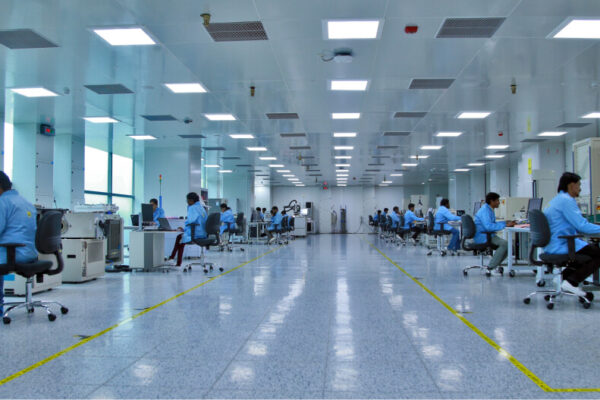
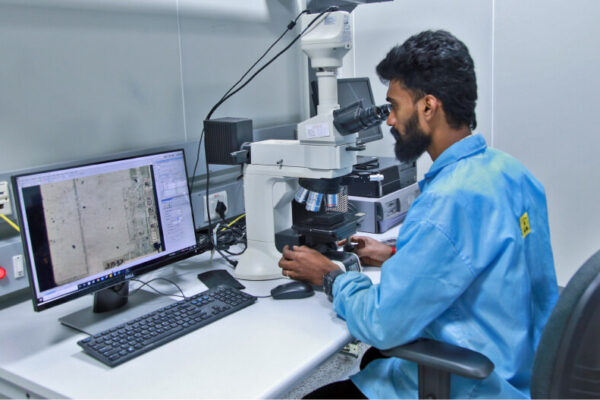
Tessolve develops those test programs and the supporting hardware. Its published services include wafer testing, checking what freshly manufactured chips can actually do, and testing them in systems closer to their eventual use.
I find this more revealing than calling it a "chip company". That label could mean anything from drawing a circuit to running a factory. Tessolve sells the engineering that helps customers get from a design to a working product. Testing was its entrance; it now also offers chip design and package design.
That distinction matters for India's OSAT story. For an assembly-and-test company, Tessolve can write the tests that check whether a chip works. That's a service the factory can buy instead of developing every test itself. That does not make Tessolve itself the owner of a new assembly factory. Its recent investment announcement says it works with emerging Indian foundries, OSATs and chip startups. It doesn't announce a Tessolve OSAT plant.
Then the package gets a promotion
For a long time, it was tempting to imagine the package as the bit around the important bit.
Now consider a different arrangement. Instead of making one enormous chip, a designer puts several smaller chips into one package. These are called chiplets. One might do the computing; another might handle a different job.
Fine. But now they must talk to one another very quickly. They also need power, and all that work produces heat. The package becomes part of how the whole machine performs.
In July, Tessolve announced that it was supporting package designs using Intel Foundry's EMIB technology. The long name is Embedded Multi-die Interconnect Bridge. The useful idea is simpler: tiny silicon bridges help connect separate chips inside a package.
Tessolve's role is in designing and checking those connections. It isn't claiming to manufacture Intel's bridges.
This is why packaging is worth paying attention to. Sometimes the next improvement isn't only about making a smaller circuit. It is about getting several circuits to work together without creating a traffic jam or a miniature heater.
A good engineering business still has to be a good business
A faulty chip cannot always be fixed with a software update. Some errors mean another manufacturing run, more testing and a longer wait.
Tessolve also needs laboratories and expensive test equipment, alongside its engineers. Its services business is different from owning a fab, but it isn't a laptop-only business either.
And building expertise doesn't automatically mean building a great business. CRISIL's May 2026 rating report says Tessolve's top five customers contributed 47% of FY26 revenue. That is a lot of work resting with a few buyers.
Crisil says the acquired businesses have been integrated, but some have yet to reach their full potential. Buying skills and earning a return from them are different jobs.
So I would watch whether customers keep giving Tessolve more work, whether it earns good money from that work, and whether its acquisitions actually improve what it can deliver. A funding announcement cannot answer those questions.
Where India fits
India is already moving beyond announcements here. Micron said its Sanand assembly-and-test facility had begun commercial production when it opened in February 2026. Wafers made elsewhere enter that facility and leave as finished memory products.
Micron is packaging and testing its own products there, so it isn't a neat example of an independent OSAT taking work from many chipmakers. It is evidence that assembly and testing are becoming a real manufacturing activity in India.
So is this India's opening? It could be. Tessolve shows that engineering skills can be built here and sold to global chip customers. Local assembly-and-test plants create another place for those skills to be used.
The customer's question is more practical: can you deliver working chips, on time, at a price that makes sense?
Expensive equipment has to stay busy. Engineers must keep improving the share of chips that pass, without letting faulty ones slip through. That is the business behind the factory opening.
I can see why the Infosys analogy is tempting: build specialist engineering skills in India, win the trust of customers around the world and keep earning more of their work. Infosys already offers semiconductor engineering too, so Tessolve has to make its case as a specialist, not as the first company to notice the opportunity.
Could Tessolve become a global services champion in chips? That is a useful question.
Notice what Tessolve did along the way. It didn't abandon testing to take up design. It built a business that connects them. When a test reveals a recurring problem, the answer might be a different test, a different package or a change to the chip's design.
That gives us a better question to ask than "Are we making chips yet?"
Which part of a chip's journey can an Indian company become very good at?
Tessolve began with an answer that sounded almost modest: find out whether the chip works.
It turns out that question can take you a long way.
Edited by Parag Somani
Sources
- The Infosys analogy, and its limits
- Infosys is already in this market
- CRISIL rating report - Tessolve, 18 May 2026
- The growth ambition remains an ambition
- The name behind the quote
- The $75 million announcement
- What Tessolve actually tests
- Package design is engineering
- The Intel Foundry collaboration
- Independent coverage of the collaboration
- What a package does
- Why testing happens more than once
- An operating Indian assembly-and-test example
- India also has a chip-design ecosystem
- Independent funding context
Laboratory photographs: Tessolve, from its published test-engineering gallery.