Rendezvous Robotics raises $20 million for self-assembling spacecraft
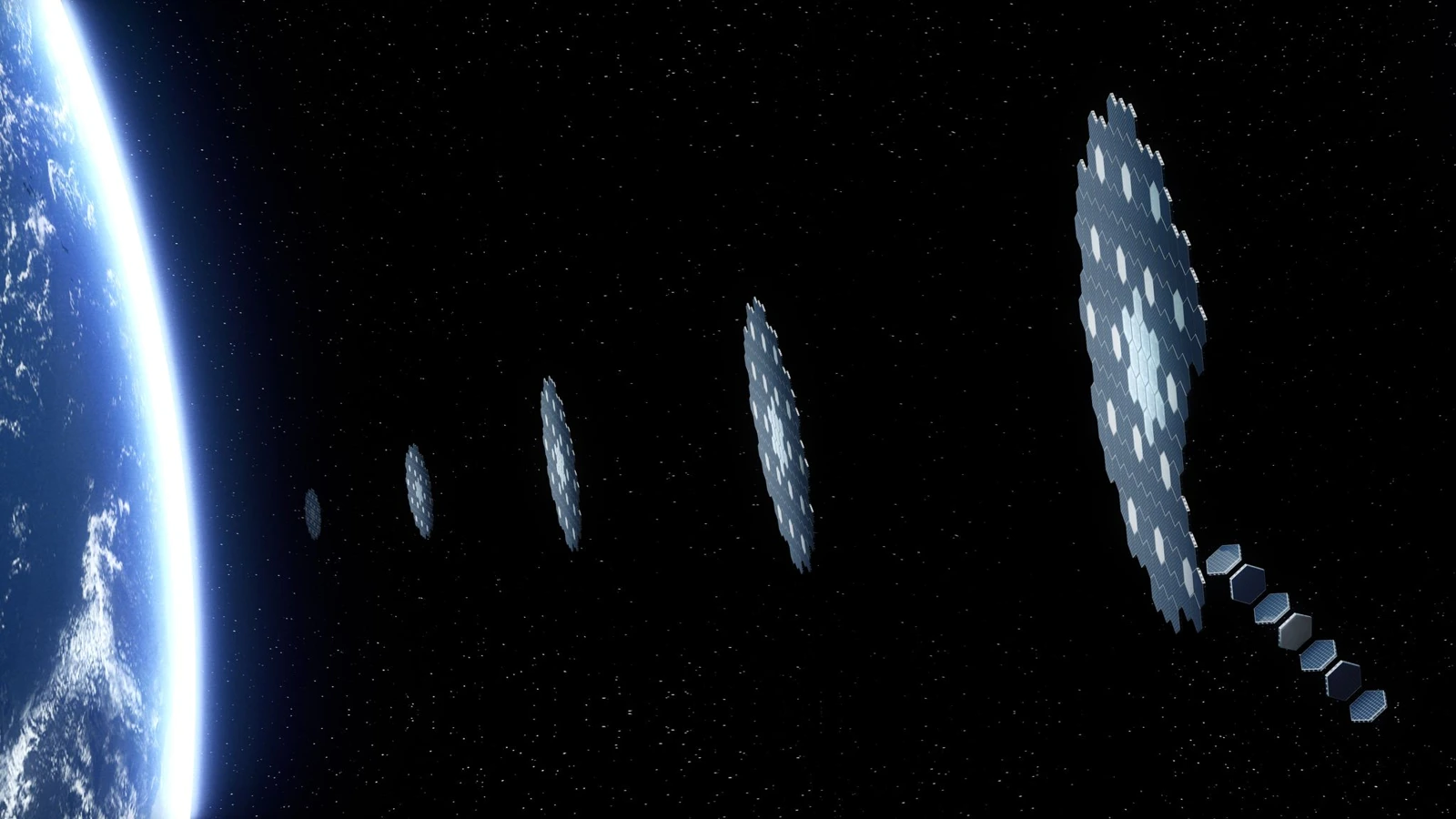
Rendezvous Robotics has raised $20 million in an oversubscribed seed round co-led by MaC Venture Capital and Toyota Ventures. The Golden, Colorado company builds modular spacecraft designed to assemble and reconfigure in orbit. Instead of launching one large finished spacecraft, it launches independent tiles that manoeuvre, line up and connect to form a larger structure. The approach aims to ease the size limits imposed by a rocket’s protective fairing and allow spacecraft to add capabilities after launch. The money supports next-generation spacecraft development, flight demonstrations and hiring. Ground demonstrations are underway. Parabolic microgravity testing is planned for November 2026, while a separate final 32-tile TESSERAE ISS experiment is scheduled for December. A seven-tile free-flying mission is planned no earlier than April 2028. These remain planned tests, not completed in-orbit assembly of the new architecture. The funding announcement is dated October 28; a November 2 LinkedIn reshare is not a new financing event.
DTT summary based on Rendezvous Robotics's report. The full article is on the publisher's site.
Additional reporting
$20 million oversubscribed seed; first priced financing, announced October 28, 2026.
MaC Venture Capital and Toyota Ventures.
University of Michigan Endowment, Astera, Industrious Ventures, Humbition, NextView Ventures, Aurelia Foundry, ATX Venture Partners and Mana Ventures, among others.
Independent modular spacecraft tiles manoeuvre, align and connect using autonomous control and electromagnetic actuation. They are designed to form larger structures and change configuration after launch.
Parabolic microgravity testing planned for November 2026. A separate final fifth-generation TESSERAE ISS experiment with 32 tiles is scheduled for December 2026.
Seven independent spacecraft tiles are planned to assemble, separate and reassemble on a reserved rideshare mission no earlier than April 2028. Not a completed flight milestone.
TESSERAE began at MIT and was developed through the Aurelia Institute. Earlier generations flew on New Shepard and two ISS missions; those are not proof the larger free-flying architecture is operational.
Develop next-generation spacecraft, conduct flight demonstrations and expand the team.
Joe Landon, co-founder and CEO; Dr. Ariel Ekblaw, co-founder and board chair. Golden, Colorado, US.
The checked primary release calls this the first priced round but does not disclose prior-round amounts or a valuation.